Thursday, 26 January 2012
Pitch Focus Group
Here is our focus group which we carried out after showing our pitch to select members of a focus group.

Friday, 20 January 2012
Receiving Pitch Feedback
After our pitch we asked our audience (members of our class) what they thought of our pitch and concept. Responses were generally positive and we were provided with useful notes and feedback to improve or change our concept for our music video.
The questions asked were:
1) Does the concept work for you?
Responses to our primary question were very positive. The concept was described as 'original', 'good', 'funny', and that it 'fits well with the music and is easy to understand'. No members of our audience pointed out any fault with the concept.
2) Does our target audience match our music video concept?
Our audience profile was described as 'vague'. As a result we will better define our audience profile later on to potentially better match our concept. From feedback received we decided that our editing style would need to change to maintain interest from our viewers and our target audience.
3) Does our costume choice match our concept well?
We were concerned our first choice of costume of suits and balaclavas would be too entropic for the style of the video. We have since changed this costume choice, as our feedback gave us mixed responses. Some said that '[it would be] never too entropic, it will be funny' and 'it supports the concept', but others 'wouldn't look good if you were just walking the streets'.
4) Will the video be feasible? Are there any parts which you consider may be difficult?
Responses were generally positive and said that the video could be shot fairly easily however we would need to work on improving realism and authenticity by choosing film locations well.
5) Is our concept original?
Our concept primarily had solely narrative elements but we have since chosen to add performance elements in too. All responses back said the concept of the music video was original.
The questions asked were:
1) Does the concept work for you?
Responses to our primary question were very positive. The concept was described as 'original', 'good', 'funny', and that it 'fits well with the music and is easy to understand'. No members of our audience pointed out any fault with the concept.
2) Does our target audience match our music video concept?
Our audience profile was described as 'vague'. As a result we will better define our audience profile later on to potentially better match our concept. From feedback received we decided that our editing style would need to change to maintain interest from our viewers and our target audience.
3) Does our costume choice match our concept well?
We were concerned our first choice of costume of suits and balaclavas would be too entropic for the style of the video. We have since changed this costume choice, as our feedback gave us mixed responses. Some said that '[it would be] never too entropic, it will be funny' and 'it supports the concept', but others 'wouldn't look good if you were just walking the streets'.
4) Will the video be feasible? Are there any parts which you consider may be difficult?
Responses were generally positive and said that the video could be shot fairly easily however we would need to work on improving realism and authenticity by choosing film locations well.
5) Is our concept original?
Our concept primarily had solely narrative elements but we have since chosen to add performance elements in too. All responses back said the concept of the music video was original.
Thursday, 19 January 2012
Our Pitch
Our Pitch for our music video aims to cover details about the band and their influences, a potential target audience, and any inspirations we may like to incorporate into our final video.

Friday, 6 January 2012
The Track
We have gained permission to use the song Ragdoll Blues by Australian band The Novocaines. Our original idea was to use another one of their tracks, Cup of Coffee from their Ragdoll EP but as the development of our planning changed we decided this track would be better.
We contacted the band via email and received the following response.

We contacted the band via email and received the following response.

Thursday, 5 January 2012
Breaking Conventions
I have already analysed music videos of a similar music genre to the track that we intend to make a video for. I will now attempt to analyse in detail a music video of a contrasting nature to what I've already looked at; the following video is First of the Year (Equinox) by American dubstep/electronic artist Skrillex, released in 2011.
The video uses a hybrid narrative and concept structure; beginning with a quiet, cinematic introduction before the soundtrack begins. A man is shown on a bench, alone, in a long coat, watching children playing at a school. Instantly, the video plays to a redundant paedophile stereotype; showing a very general, expected and typically understood appearance of a potential criminal. The camera tilts upwards showing that he holds a sweet, and his cold facial emotion is accompanied by a dull wind sound in the background.
The shot then moves to a camera facing downwards at the ground as a young girl skips into shot. She is shown alone and therefore represented as quite vulnerable; she skips while the man walks calmly, show middle of frame and at face level to show his hard, determined facial expression. As the soundtrack slows before the first drop the camera moves to show the sun disappearing behind a disused warehouse building, with the two introduced characters walking underground. At this point it could be interpreted that there is a shift in power as the girl who skips down the stairs seems more confident than the man, or simply that the man is checking for other people following them.
The video does follow some of Goodwin's theory ideas. As the music approaches the drop there is a relationship between the only lyric in the song, "call 911 now", which is shown in the video by the girl with the telephone. The redundancy of the girl being in trouble is then contrasted completely; the video shifts into a concept where the man is being preternaturally attacked, and it is then he who is in trouble.
The editing reflects the pace and structure of the music with repeated, jaggy, jump cuts.
The video uses a hybrid narrative and concept structure; beginning with a quiet, cinematic introduction before the soundtrack begins. A man is shown on a bench, alone, in a long coat, watching children playing at a school. Instantly, the video plays to a redundant paedophile stereotype; showing a very general, expected and typically understood appearance of a potential criminal. The camera tilts upwards showing that he holds a sweet, and his cold facial emotion is accompanied by a dull wind sound in the background.
The shot then moves to a camera facing downwards at the ground as a young girl skips into shot. She is shown alone and therefore represented as quite vulnerable; she skips while the man walks calmly, show middle of frame and at face level to show his hard, determined facial expression. As the soundtrack slows before the first drop the camera moves to show the sun disappearing behind a disused warehouse building, with the two introduced characters walking underground. At this point it could be interpreted that there is a shift in power as the girl who skips down the stairs seems more confident than the man, or simply that the man is checking for other people following them.
The video does follow some of Goodwin's theory ideas. As the music approaches the drop there is a relationship between the only lyric in the song, "call 911 now", which is shown in the video by the girl with the telephone. The redundancy of the girl being in trouble is then contrasted completely; the video shifts into a concept where the man is being preternaturally attacked, and it is then he who is in trouble.
The editing reflects the pace and structure of the music with repeated, jaggy, jump cuts.
Sunday, 1 January 2012
Introduction and Analysis of Redundancy and Entropy
Redundancy covers what are typically understood or expected elements and/or ideas that form part of music videos. Redundant features of music videos are typically genre-related ideas, so for example elements of a performance would be redundant or expected in a rock-genre music video. Another common, redundant element of music videos is the subjection of women in R&B or rap music videos, or features of a band's visual style.
Entropy is the unexpected; it's unpredictability in what the music video will throw at its viewing audience. Entropy covers unusual things, and sometimes can convey a skewed message or idea, whereas a strong degree of redundancy is necessary to put across a practical communication. Entropic videos often break typical genre video conventions and are often disjunct to their music and lyrics.
I will now analyse an example of entropy in music videos, then an example of redundancy respectively.
The following video is 1979 by the Smashing Pumpkins from their 1995 album Mellon Collie and the Infinite Sadness.
There is a predominant sense of nostalgia and youth in this video, and all scenes are reminiscent of a 90's teenage social group. Lyrics (as per many Smashing Pumpkins songs) are obscure but they reveal details of suburban life and typical feelings of teenagers.
Editing is slow paced in many places and there are plenty of long takes in this video, typical of the slow rock genre, a redundant feature of the type of alternative rock the band takes on. The redundancy is essential in provoking feelings or portraying ideas that aren't vague; the video gives a clear narrative and idea that doesn't leave audiences guessing at possible meanings, but gives them a strong sense of an idea that they can interpret the video's meaning from themselves.
Redundant features of the video that stem from the theme of youth include the typical party scene and the teenage group is often shown driving a car.
Entropy is present in the video. Billy Corgan, the lead singer of the band, is shown in the back of a moving car alone. It is usual for alternative rock groups to show the entire band when performing; in this instance Corgan is shown without a band behind him, and the performing band does not appear for the rest of the video (however a band is shown playing in the house party scene). The camera angles used in the video are entropic in that they are used to show different perspectives, viewpoints and rather than show groups of the people the video is about. These cameras are often attached to random objects: for example the inside of the tyre, the centre of the car interior, the shower head and the toilet rolls that are thrown over the neighbourhood's trees.
The following video is Vinternoll2 by Swedish alternative rock band Kent, released in 2002.
When the lyrics to Kent's Vinternoll2 are translated from their native Swedish, they allude to winter and the rock group's music video is redundant in that it is performance-based and introduces snow after the first minute.
Loneliness is a theme that runs in the lyrics; the introduction of the video sets an appropriately lonely scene in a dark forest, which is effective yet redundant. The close ups of the band and their instruments is common with this genre of music, and is often a demand of the record label as per Goodwin's theory; Kent were, at the time of the video, signed to BMG Sweden/RCA. A regular and redundant convention the video employs is showing the frontman of the band when he is singing verse and through the instrumental ending the band is shown more prominently.
The only entropic elements of the video are in the editing; some images are shown, reversed, and shown again in quick succession whilst the soundtrack continues asynchronously. This effect is also used again when frontman Joackim Berg sings the lyric "igen, igen, igen" (again, again, again) and the shot of him singing is repeated three times (this effect also relates lyrics to visuals, another one of Goodwin's theory conventions).
Overall the video is typical and follows its genre conventions and is therefore a fairly redundant music video.
Entropy is the unexpected; it's unpredictability in what the music video will throw at its viewing audience. Entropy covers unusual things, and sometimes can convey a skewed message or idea, whereas a strong degree of redundancy is necessary to put across a practical communication. Entropic videos often break typical genre video conventions and are often disjunct to their music and lyrics.
I will now analyse an example of entropy in music videos, then an example of redundancy respectively.
The following video is 1979 by the Smashing Pumpkins from their 1995 album Mellon Collie and the Infinite Sadness.
There is a predominant sense of nostalgia and youth in this video, and all scenes are reminiscent of a 90's teenage social group. Lyrics (as per many Smashing Pumpkins songs) are obscure but they reveal details of suburban life and typical feelings of teenagers.
Editing is slow paced in many places and there are plenty of long takes in this video, typical of the slow rock genre, a redundant feature of the type of alternative rock the band takes on. The redundancy is essential in provoking feelings or portraying ideas that aren't vague; the video gives a clear narrative and idea that doesn't leave audiences guessing at possible meanings, but gives them a strong sense of an idea that they can interpret the video's meaning from themselves.
Redundant features of the video that stem from the theme of youth include the typical party scene and the teenage group is often shown driving a car.
Entropy is present in the video. Billy Corgan, the lead singer of the band, is shown in the back of a moving car alone. It is usual for alternative rock groups to show the entire band when performing; in this instance Corgan is shown without a band behind him, and the performing band does not appear for the rest of the video (however a band is shown playing in the house party scene). The camera angles used in the video are entropic in that they are used to show different perspectives, viewpoints and rather than show groups of the people the video is about. These cameras are often attached to random objects: for example the inside of the tyre, the centre of the car interior, the shower head and the toilet rolls that are thrown over the neighbourhood's trees.
The following video is Vinternoll2 by Swedish alternative rock band Kent, released in 2002.
When the lyrics to Kent's Vinternoll2 are translated from their native Swedish, they allude to winter and the rock group's music video is redundant in that it is performance-based and introduces snow after the first minute.
Loneliness is a theme that runs in the lyrics; the introduction of the video sets an appropriately lonely scene in a dark forest, which is effective yet redundant. The close ups of the band and their instruments is common with this genre of music, and is often a demand of the record label as per Goodwin's theory; Kent were, at the time of the video, signed to BMG Sweden/RCA. A regular and redundant convention the video employs is showing the frontman of the band when he is singing verse and through the instrumental ending the band is shown more prominently.
The only entropic elements of the video are in the editing; some images are shown, reversed, and shown again in quick succession whilst the soundtrack continues asynchronously. This effect is also used again when frontman Joackim Berg sings the lyric "igen, igen, igen" (again, again, again) and the shot of him singing is repeated three times (this effect also relates lyrics to visuals, another one of Goodwin's theory conventions).
Overall the video is typical and follows its genre conventions and is therefore a fairly redundant music video.
Friday, 23 December 2011
Andrew Goodwin's Theory
In his 1992 book, Dancing in the Distraction Factory, Andrew Goodwin introduced six different common features of music videos.
I will try to apply this theory to Incubus' Anna Molly, from their 2006 album, Light Grenades.
I will try to apply this theory to Incubus' Anna Molly, from their 2006 album, Light Grenades.
Andrew Goodwin's Theory - Incubus
View more presentations from rallywill.
Thursday, 15 December 2011
Textual Analysis of Music Videos
Friendly Fires – Skeleton Boy
In the music video for the Friendly Fires’ Skeleton Boy, the band is present in a performance style of video. They are dressed in one-piece skeleton suits, a nod to the title of the song, and the video uses two contrasting colours of black and white. As well as the performance nature of the video, it is also conceptual, with the band appearing to play through an artificial snow storm.

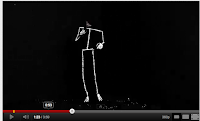


 The band is typically indie in terms of its genre, and the music video typically carries elements of redundancy and entropy. Indie bands tend to have performance-type videos, which the Friendly Fires have used in this case. An entropic dimension to this video is that they are dressed in skeleton suits, there is artificial snow, and there are only two colours present in the entirety of the video. This sense of entropy may appeal to the alternative-youth audience in that the video is enigmatic; it challenges conventions of the indie genre, it is bold in its monochromatic approach to the indie music video scene, and carries an interesting concept that reflects the title of the song.
 The visuals often respond to the music, particularly when the artificial snow stops falling when the lyrics allude to ‘night’, and lead singer Ed McFarlane is shown in the centre of the shot with a long shot. Later in the track, the lyric is ‘you’re too much, too much’, at which point the long shot that shows McFarlane triples to show him repeated three times in the long shot. This is an example of the visuals amplifying the lyrics, with the meaning of the song being added to by the visuals.
The costume in the video is a major feature. Progressively, the costumes become more detailed, as at the start of the video they simply wear black suits. However, throughout the video they gain white skeletal limbs and end the video with a full skeleton, covered in white shapes which could also be interpreted as clothes.
Pendulum – Crush
Pendulum – Crush
At the immediate beginning of the video, there is a red screen that the proceeding images fade in from. The video’s mood is full of mixed emotions, as it follows a man who has lost his love, though it is unclear how. A prevailing feeling displayed from the male protagonist is a sense of rage, anger, bitter disappointment and misery. The edit of the red screen may connote this general feeling, amplifying the meaning of the video.
There is a very strong sense of narrative in the first twenty seconds of the video, and is entropic in that the opening of the video commences in a more cinematic style than one of a typical electronic rock genre music video. The intro is rich with edits, with many of the character’s memories shown as sharp flashbacks. Before the soundtrack of the music video for Pendulum’s Crush begins, there is an introductory close-up of the main character that features in this narrative type of music video, accompanied by ambient.
The screen of red is a recurring feature in the narrative video, particularly in connoting anger. The viewing audience is given a sense of catharsis with scenes that follow; often indicating through effects in the video that its protagonist has lost somebody close to him.
The video demonstrates an extended metaphor of escape; there are scenes of the male character running, of him in lonely situations or environments, and despite him often shown in locations where there are other people present audiences can instantly feel that the protagonist is alone, physically and somewhat mentally. The opening scenes that introduce this solitude are split with fast, straight cuts and the editing speed is very quick for the majority of the video, however there are more long takes present towards the denouement.
The video jumps quickly between shots of him alone and with his (ex)partner (who the audience can consider to be the source of his apparent depression). Colour is a prominent feature in connoting anger; aswell as the fade-from-red introduction there are scenes where the former couple argue where the video turns monochrome.
IS TROPICAL - The Greeks
The song ‘The Greeks’ by British band, Is Tropical, was released in 2011 and has a very unique visual style. The band is an alternative/indie group and has released their debut album, Native To, this year. The video features a group of children set in a quiet French suburb and is visually relevant to the indie style of the band and at the same time takes comic book violence and adds a perfectly naïve and innocent front to it, represented in the child stars.
I liked this video because of it’s unique visual style – a distorted cartoon cross reality music video. I liked the narrative – several kids living on the same street play fighting having a war and the detail they went into, such as the mini-story with the drugs and C4 bombs; I also liked the mood of the video – a seemingly serious introduction followed by kids with toy guns, then the interruption of lunchtime; the video is very light hearted.
The video has an abundance of editing, with fake CGI blood, explosions, bullet animations and sound effects, that take an innocent playfight with water pistols between suburban children into a full blown conflict. Not only is there graphic editing but also synchronous sound effects that match what is happening in the video.
Tzvetan Todorov's theory of equilibrium is present in the narrative structure; the video starts with a sense of equilibrium when the first child is presented, despite him appearing to be injured. The equilibrium is instantly broken however after the first half minute and is never restored again, until the video ends with a resolute explosion as all characters walk away in a group.
The attitudes and ideology presented in the video show or reflect the indie genre of the band. The genre of the playing band is alternative and so the video carriers many indie and unique features. The narrative and visual style is unique to this style of music, and representation of children in the video is of a playful mood yet they are shown to be able to take things seriously. The target audience is a young adult group.
Wednesday, 7 December 2011
Time Management #1
Over the course of the music video project we will aim to manage our time to organize ourselves so that optimal amounts of time can be spent on each section of work that needs doing. This will be a work in progress calendar that will alter throughout the process of the music video development that will reflect changes in time taken to do certain tasks.
Here is our plan for the remainder of December up to the end of term;

Here is our plan for the remainder of December up to the end of term;

Subscribe to:
Posts (Atom)